
Local Invention Finds Its Next Chapter in Westmoreland County |
Keith Dvorchak’s Scrape & Sweep shows what a Youngwood makerspace can offer an everyday problem solver |
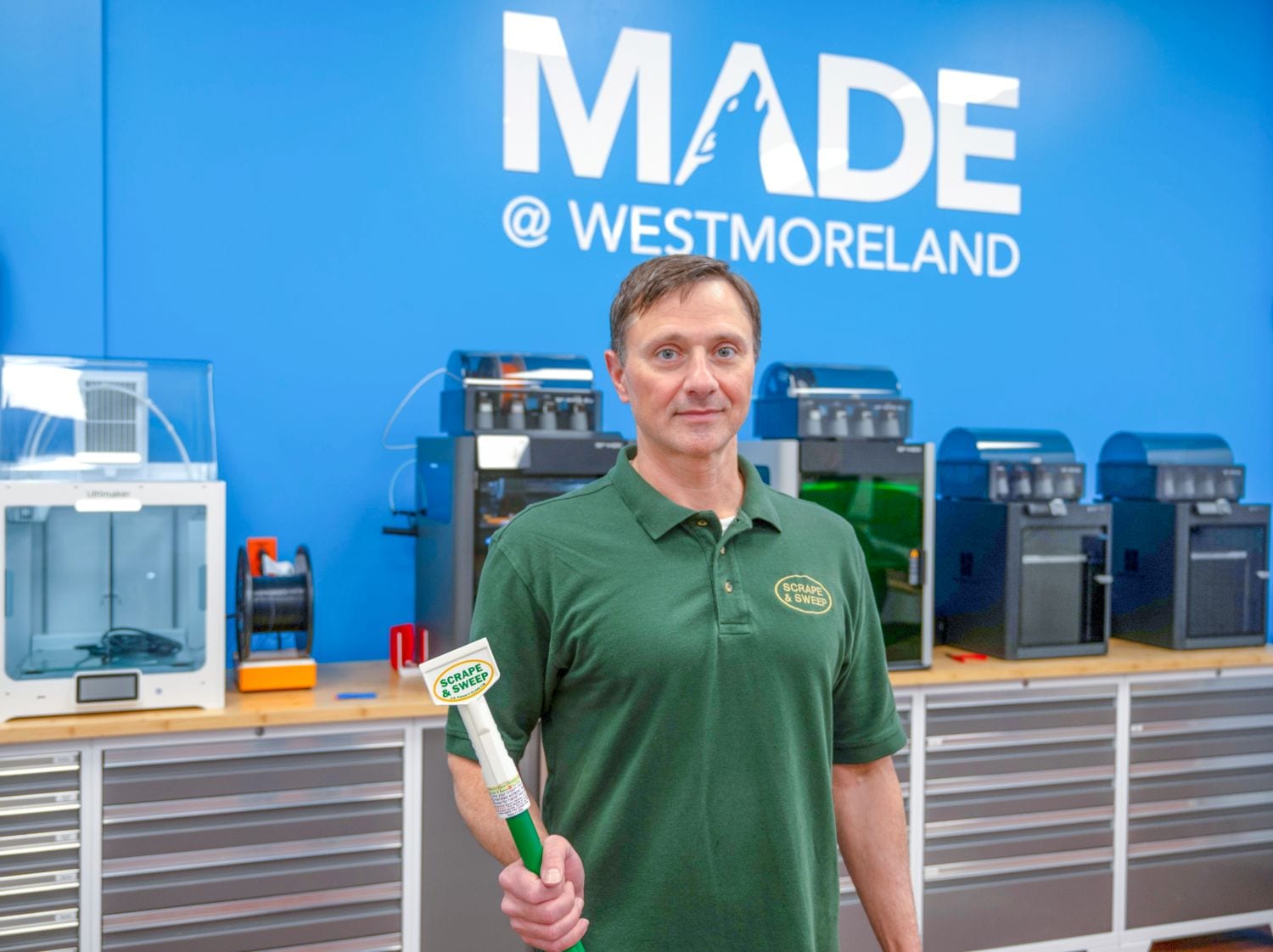
A kitchen cleanup problem has become a useful example of local ingenuity in Westmoreland County, where a college graduate is continuing to improve a patented invention.
Keith Dvorchak, a 2013 business management graduate, developed the Scrape & Sweep after looking for an easier way to remove food that had dried onto his floor.
The latest chapter connects that practical idea with MADE @Westmoreland, the community makerspace in Youngwood, where equipment and training are helping him refine the design.
From a household fix to a working product
The tool attaches to a broom or mop handle for scraping and can be removed for use by hand.
Its origin is refreshingly ordinary: a parent trying to deal with the mess left behind while a child learned to feed herself.
Dvorchak’s original solution used an ice scraper and eventually a shaped PVC attachment, while later work introduced computer modeling and printed prototypes.
The college’s November 6 update describes five design generations and a patent granted in 2019, following an application in 2016.
That timeline makes this a story about continued improvement, with the current focus on developing an existing product rather than announcing a newly issued patent.
The inventor’s website describes uses ranging from dried food to stickers and provides product information and a purchasing link.
Readers considering the tool should review its current specifications and suitability for their own surfaces rather than assume every cleaning task is the same.
A place to test the next idea
At MADE, Dvorchak has been able to work with 3D design and printing, testing changes before moving toward his goal of more efficient production.
For another resident with an idea, the larger takeaway is that experimenting need not begin with buying an entire workshop.
The makerspace’s Innovation Lab lists 3D printers, laser cutters, a desktop CNC machine and design software among its resources.
Other areas support woodworking, metal fabrication, textiles and design, giving projects several possible routes from drawing to physical object.
The facility welcomes community members as well as students, and its workshops are open to nonmembers.
A project workshop and equipment certification serve different purposes, so first-time visitors should check which kind of session fits their goal.
Getting started in Youngwood
MADE is located in the Business and Industry Center at 151 Pavilion Lane in Youngwood.
Its published joining process begins with a scheduled tour, followed by membership registration and a 30-minute orientation.
Using particular equipment requires the corresponding certification, with classes generally lasting two to four hours.
Published individual membership is $49 per month, with other options for students, teams and families; prospective members should confirm current pricing and access details.
Membership runs month to month, a practical detail for someone exploring whether regular workshop access makes sense.
Before visiting, bring a sketch, a description of the problem or a clear question about materials, and ask staff what training would be needed.
That preparation can make the first conversation more useful without requiring a finished business plan.
Dvorchak’s experience offers an encouraging local starting point: notice a stubborn everyday problem, try a workable fix, and keep improving it with the right help.
For residents curious about making something themselves, a tour is a concrete next step toward finding out what is possible close to home. |
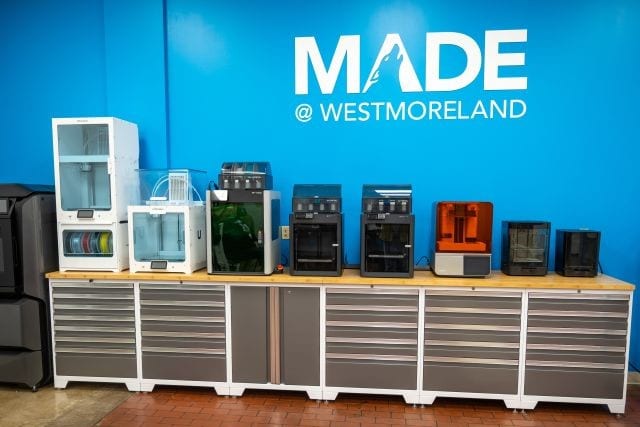 3D printers at MADE @Westmoreland. Photo: Westmoreland County Community College. |

0 Comments
Join the conversation
Be the first to comment
Share your thoughts above.